
Posts by Pacific Healthcare Imaging
Perform Basic C-Arm Testing

The Simplest Form of C-Arm Testing: Test for C-Arm problems using an x-ray phantom (If you don’t have a phantom, use radiopaque objects on the procedure table such as keys, coins, sheets, towels etc.). Position the C-Arm over the procedure table. Are the images dark, grainy or light? Are the edges sharp or blurry? Does…
Read MorePurchasing Used C-Arm?
Before purchasing used C-Arm’s, you want to do the necessary research. Make sure you let the seller know that you would like to know all about their refurbishing process. (See Reasons to Buy Refurbished) Here are some questions to ask before purchasing a used C-arm: What are the specifics in the warranty and application packages?…
Read MoreFluoroscopy C-Arm Safety Guidelines

Fluoroscopic C-Arms require knowledge and education to properly monitor and reduce exposure levels to your patients and staff. You should receive training from a qualified expert (radiologist or radiological health physicist) on safety procedures and proper imaging techniques to minimize risk and future liability. Good safety practices, below, can also keep radiation amounts As Low…
Read MoreFluoroscopic C-Arm

Fluoroscopic C-Arm: At least 50% of an estimated 4-10 million interventional pain procedures are performed yearly in the U.S. under fluoroscopy using fluoroscopic imaging equipment, such as a Fluoroscopic C-Arm. Most clinicians favor fluoroscopy because it allows for a more exact needle placement, which ensures the accurate delivery of the injected drug. However, fluoroscopic guidance…
Read MoreOEC 9900 Elite C-Arm

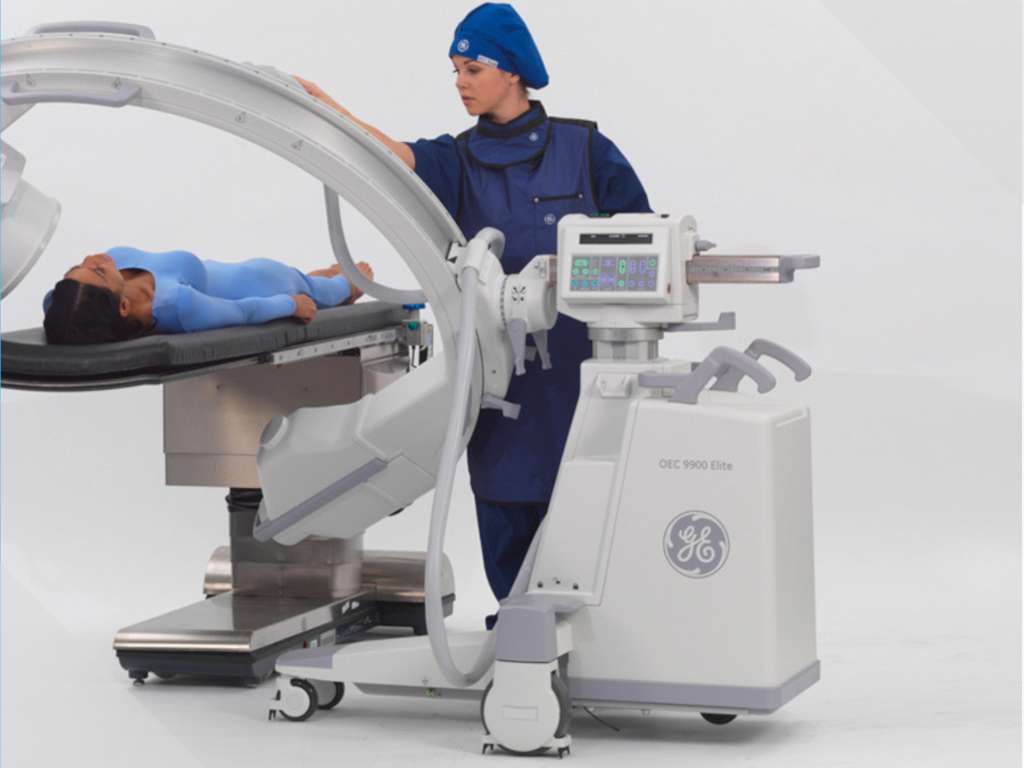
State-of-the-Art Image Quality and User-Friendly Interface: The OEC 9900 Elite C-Arm is designed to deliver superb clinical images during both simple and challenging imaging cases, with fast and easy positioning. See which configuration – based on II size, type of C and optional features – will best meet your clinical needs. Imaging profiles optimize your image…
Read MoreC-Arm Purchase

C-Arm Purchase Considerations: C-Arm Purchase decision is simple but choosing the right for your practice can be overwhelming. Without having adequate knowledge, the search process can become information overload with the wide variety of brands, sizes, and costs involved. In the end, the deciding factor in your C-Arm purchase comes down to what type of imaging…
Read MoreC-Arm Types – Examples

There are four types of C-Arm that vary in sizes and specialization. The four types are Mini C-arm, Compact C-Arms, Full-Size C-Arms, and Super C C-Arms. Mini C-Arm: The Mini C-Arm the common size is 4”/6” image intensifier that specializes in scanning extremities such as hands, feet, ankles, knees, elbows, and shoulders (depending on the…
Read MoreMini C-Arm Radiation Information

Radiation Exposure: Mini C-Arm radiation exposure is less then with the conventional C-arm. Radiation exposure should be kept to the absolute minimum to the patient and the surgeon, and ionizing Radiation Regulation (2000) requires that the radiation exposure be clinically justified and: Performed by a trained professional. Kept to as minimal exposure as possible, or…
Read MoreMajor C-Arm Companies

Major C-Arm Companies – Differences to Consider When Purchasing Imaging Equipment. Major C-Arm companies are GE, Philips, Siemens, Ziehm, Hologic, and SonoSite. Cost? When it comes to the cost of a C-Arm what matters the most is the age of the C-Arm, features, as well as the brand & model. For example, a Philips Pulsera can…
Read MoreOEC 9800 – Best Selling C-Arm

While it is true that OEC no longer sells new 9800 C-arms, the OEC 9800 has been the best-selling C-arm ever in America. It has been a mainstay on the C-Arm market for 20 years, but many are concerned that it will become obsolete or declared end of life. The latest new unit sold in…
Read MoreC-Arms – Information and Usages
C-Arm name is derived from the C-shaped arm used to connect the x-ray source and x-ray detector to one another, and has various spellings: C-arm, C-Arm, c-arm, c arm. C-arms have radiographic capabilities, though they are used primarily for fluoroscopic intraoperative imaging during surgical, orthopedic and emergency care procedures. The devices provide high-resolution X-ray images in real time, thus allowing the physician…
Read MoreMini C-Arm Advantages & Disadvantages

Mini c-arms produce a small detector area, uses lower laser power, has tight beam collimation and uses the new technique of pulse fluoroscopy. Because it’s simple to use and compact, it’s popular for routine use, especially for hand, ankle and foot surgeries. They have also contributed toward making procedures less invasive and costly. This is…
Read MoreSell Your Medical Equipment

Pacific Healthcare Imaging has been in the business of selling and servicing medical equipment for many years. However did you know that we also buy back equipment from clinics, hospitals, private physicians and imaging centers? We do! We are actively looking to buy anything used in imaging equipment including: MRI machines. Both single-slice and multi…
Read MoreUltrasound Versus Radiology

Medical professionals use sonography to diagnose conditions and internal injuries. Ultrasound techniques are also used to monitor pregnancies and help doctors develop treatment plans. The importance of accurate imaging in modern medicine makes skilled sonographers a critical part of any healthcare team. Emerging technology is increasing the usefulness of medical imagining. The ability to view different body…
Read MoreMobile C-Arm

What is a Mobile C-Arm? Mobile C-Arms are medical imaging devices that are based on X-ray technology and can be used flexibly in various ORs within a clinic. The name is derived from the C-shaped arm used to connect the X-ray source and X-ray detector to one another. Since the introduction of the first C-arm…
Read MoreRenting Imaging Equipment

Renting imaging equipment can be an attainable operating expense that fits into even modest budgets. For many hospitals, clinics, or private imaging centers, buying new or used imaging equipment requires large capital expenditures. The greatest value of renting is the low risk it carries. It brings the equipment you need into your facility, and costs…
Read MoreComed KMC-950 C-Arm
Comed KMC-950 C-Arm is our New C-Arm for sale. Please contact us if you have any questions about any of our new c-arm systems. Comed KMC-950 C-Arm: Allows the user to perform most c-arm procedures. With the ease of movement and positioning, the KMC-950 c-arm machine allows for fast alignment when used with an imaging…
Read MoreAfterMarket OEC Monitor Upgrade

Aftermarket OEC monitor upgrades have several options: a single, large split screen, two individual screens, fixed screens, rotating screens, screens on an articulating arm. There are also 1k, 2k, and now, 4k resolution. OEC Monitor Upgrade There is a board range of prices, depending on options. At the high is including an articulating arm, while…
Read MoreX-Ray Equipment
X-Ray machines have revolutionized the medical industry. Healthcare providers can now clearly peer into the human body without intrusion. X-Ray – Discovery and First Use: Wilhelm Conrad Roentgen, a professor at Wuerzburg University in Germany discovered the x-ray 1895. When the cathode ray was active in his laboratory with high voltage, fluorescent minerals nearby began…
Read MoreRent Versus Buying Medical Equipment

Rent versus buying medical equipment is a business decision that varies according to each practice’s unique needs and goals. Practices will rent medical equipment as a test of actual usage before venturing into a particular service line. Common reasons why medical practices rent equipment: Provide uninterrupted operations while equipment is repaired/recalibrated. You have access to…
Read MoreRefurbished Imaging Equipment – Reasons to Buy

Reasons to Buy that you May Not Have Considered: Refurbished imaging equipment generally costs half the price of new. Your Purchase could include installation and service contract. Reimbursement rates through CMS are the same, whether your equipment is new or refurbished. Third-party parts providers can supply parts 80% of the time at half the cost of…
Read MoreDifferences Between Major C-Arm Companies
What are the differences between major C-Arm companies, such as GE, Siemens, Phillips, and Zheim? Cost? When it comes to the cost of a C-Arm what matters the most is the age of the C-Arm, features, as well as the brand & model. For example, a Philips Pulsera can have the same features as GE OEC 9800 but…
Read MoreConsider Buying Refurbished Medical Equipment

MRI systems, portable x-rays, c-arms, and other medical equipment is vital for things to run smoothly in your hospital or doctor office, however it also comes at a price. When a machine starts to malfunction or it’s time for an additional piece of equipment, it’s time to start thinking about budgets and how much you can pay…
Read MoreOEC 9800 C-ARM

The OEC 9800 has been a mainstay on the C-Arm market for 20 years, but many are concerned that it will become obsolete or declared end of life. While it is true that OEC no longer sells new 9800 C-arms, the OEC 9800 has been the best-selling C-arm ever in America. The latest new unit…
Read MoreBuying a C-Arm System Considerations

Buying C-arm that is right for your practice can get a little overwhelming. Without having adequate knowledge, the search process can become information overload with the wide variety of brands, sizes, and costs involved. In the end, the deciding factor comes down to what type of imaging work you intend to do at your facility. If…
Read More