
GE OEC Elite CFD C-Arm: Features, Benefits, and Buyer’s Guide
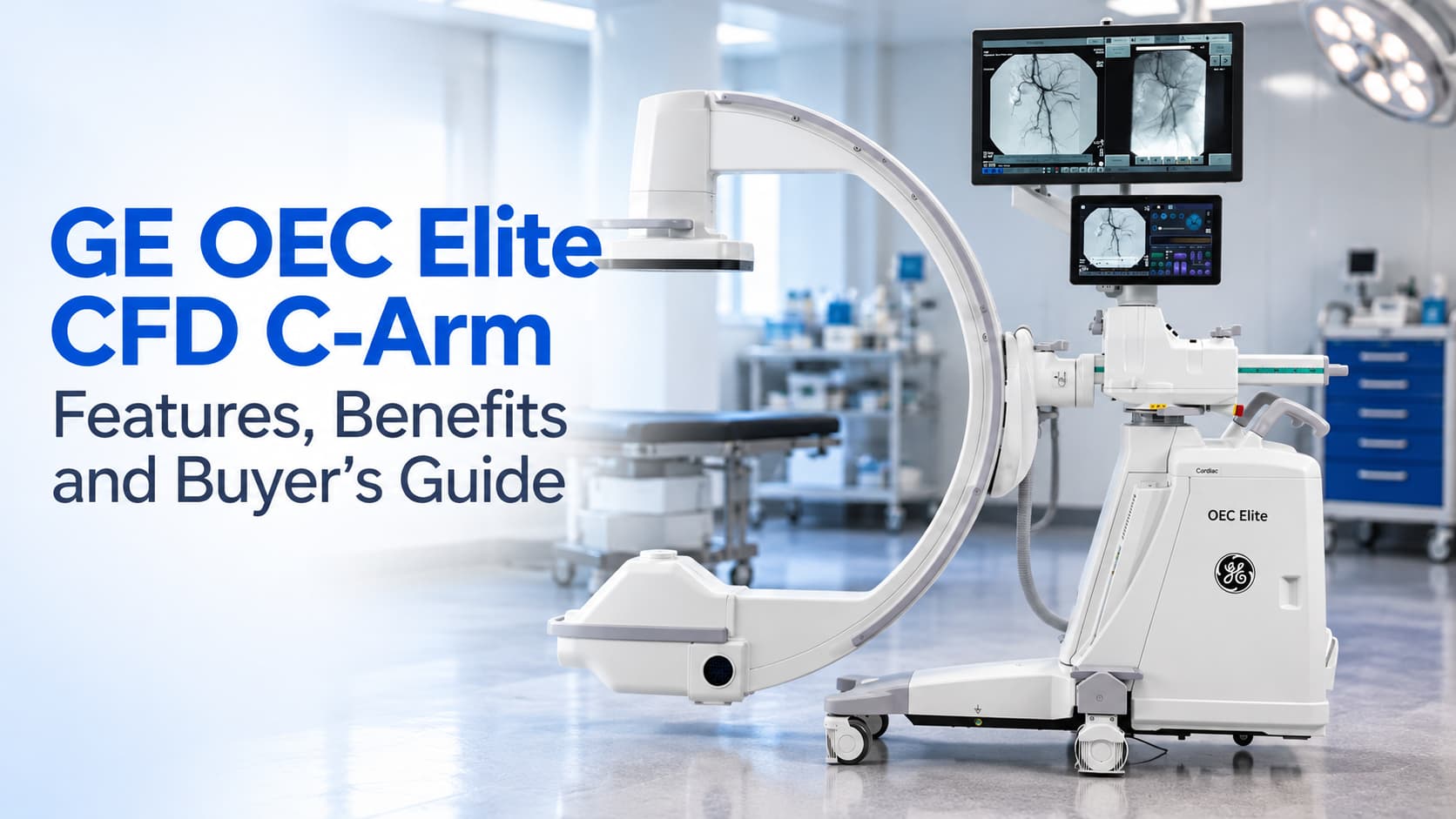
Choosing the right C-arm imaging system is a significant investment for hospitals, surgical centers, and specialty medical practices. Image quality, equipment reliability, maneuverability, and long-term service requirements all influence how effectively a system supports daily procedures.
The GE OEC Elite CFD C-arm is designed for facilities that need advanced mobile fluoroscopy capabilities, detailed anatomical visualization, and flexible positioning in the operating room.
Featuring CMOS flat-panel detector technology, 4K image display capabilities, and a range of configurations, the OEC Elite CFD builds on GE HealthCare’s established surgical imaging platform.
For facilities evaluating new or refurbished C-arm equipment, understanding the system’s capabilities and ownership considerations is essential before making a purchasing decision.
What Is the GE OEC Elite CFD C-Arm?
The GE OEC Elite CFD is a premium mobile surgical fluoroscopy system designed to provide real-time X-ray imaging during a broad range of medical procedures.
CFD refers to its CMOS flat-panel detector technology, which captures digital imaging information for processing and display.
Unlike traditional C-arm systems that use an image intensifier, flat-panel detector systems offer a different approach to image acquisition and anatomical visualization.
The OEC Elite CFD is designed to support procedures in specialties such as:
- Orthopedic surgery and fracture fixation
- Spine surgery and interventional spine procedures
- Pain management
- Vascular and endovascular procedures
- General surgical imaging
- Selected cardiac and interventional applications
The specific capabilities depend on the equipment configuration, detector size, and installed software options.
Key Features of the GE OEC Elite CFD
1. CMOS Flat-Panel Detector Technology
One of the distinguishing features of the GE OEC Elite CFD is its flat-panel detector design.
Traditional image-intensifier C-arms use an imaging chain that converts X-rays into a visible image. CMOS flat-panel technology captures the X-ray information electronically and supports advanced digital processing.
For surgical teams, this technology can provide several practical advantages:
- Detailed visualization of anatomical structures
- Digital image processing and enhancement
- A modern imaging platform for demanding procedures
- Flexible detector positioning around the patient
- Support for low-dose imaging techniques
GE HealthCare also describes image-processing features such as Live Zoom and enhanced noise reduction.
Actual image quality and radiation exposure depend on the selected technique, clinical application, patient characteristics, and equipment configuration.
2. High-Resolution 4K Image Display
Clear image visualization is an essential part of surgical fluoroscopy.
The GE OEC Elite CFD supports image presentation on an ultra-high-definition 4K display, allowing clinicians to review detailed images during procedures.
A high-resolution display can help medical teams visualize anatomical information while positioning instruments, examining alignment, or evaluating procedural progress.
However, it is important to distinguish display resolution from detector resolution. A 4K monitor does not mean the X-ray detector itself captures images at 4K resolution.
Facilities comparing C-arm systems should evaluate the entire imaging chain, including detector performance, processing software, monitor quality, and clinical image examples.
3. Advanced C-Arm Positioning and Maneuverability
Operating rooms are often crowded environments containing surgical tables, instrument carts, anesthesia equipment, and medical personnel.
The ability to position a C-arm efficiently can influence room setup and workflow.
Depending on the model and configuration, the GE OEC Elite CFD offers features intended to support:
- Access to difficult imaging angles
- Positioning around surgical tables
- Low lateral imaging positions
- Flexible C-arm movement
- Efficient image acquisition during procedures
GE offers Ergo-C and Super-C configurations, along with other system arrangements intended for different clinical environments.
Some configurations include optional motorized positioning features. Buyers should verify exactly which positioning capabilities are included with the system being evaluated.
4. Imaging Modes and Clinical Presets
The GE OEC Elite CFD platform provides imaging profiles intended for different clinical needs.
Available profiles and configurations may include orthopedic, spine, cervical spine, pediatric, vascular, and cardiac applications.
These settings help operators choose imaging techniques appropriate for the procedure.
Fluoroscopy systems may also offer pulsed imaging, low-dose operating modes, and image-processing adjustments.
For a purchasing decision, facilities should confirm which imaging profiles, applications, and software licenses are installed and functioning on the specific unit.
5. Radiation Dose Management
Radiation management is an important consideration when selecting any fluoroscopy system.
The GE OEC Elite CFD includes technologies designed to support detailed imaging while managing radiation exposure.
Available functionality includes low-dose and pulsed fluoroscopy modes, along with image-processing tools intended to maintain useful clinical visualization.
Radiation dose is affected by multiple factors, including patient size, imaging geometry, exposure settings, procedure duration, and operator technique.
Consequently, no C-arm system should be evaluated on image clarity alone.
Facilities should also consider radiation protection practices, operator training, preventive maintenance, and calibration requirements.
GE OEC Elite CFD vs. Traditional Image-Intensifier C-Arms
Medical facilities upgrading their imaging equipment often compare flat-panel detector systems with older image-intensifier models.
Both technologies can support surgical fluoroscopy, but their design and operational considerations differ.
Image Quality
Flat-panel detector systems provide modern digital acquisition and processing capabilities. Depending on the equipment and imaging conditions, this can offer advantages in image uniformity and anatomical visualization.
An image-intensifier system may still provide clinically useful imaging when properly maintained and suited to its intended procedures.
Equipment Design
Flat-panel detectors can support compact detector-head designs and positioning options that differ from traditional image-intensifier assemblies.
However, overall maneuverability depends on the complete C-arm design, not simply the detector technology.
Radiation Management
Modern flat-panel C-arms often incorporate advanced exposure control and dose-management tools.
Actual dose comparisons must be made under equivalent clinical conditions. A flat-panel detector does not automatically guarantee lower radiation exposure in every situation.
Purchase Price
Premium flat-panel C-arms generally require a larger equipment investment than many older refurbished image-intensifier systems.
For facilities with limited budgets, a well-maintained refurbished C-arm may still be a practical alternative.
The best choice depends on clinical needs, case volume, imaging requirements, and the total cost of ownership.
Which Facilities Should Consider the GE OEC Elite CFD?
The GE OEC Elite CFD may be worth evaluating for organizations that perform a varied range of image-guided procedures.
Hospitals and Surgical Departments
Hospitals managing diverse procedural needs may benefit from a versatile mobile imaging system that supports multiple clinical specialties.
Orthopedic and Spine Surgery Centers
Detailed fluoroscopic visualization is important during fracture repair, implant positioning, and numerous spine procedures.
Facilities should evaluate whether the detector size, positioning capabilities, and imaging profiles match their specific procedures.
Interventional and Vascular Facilities
Selected OEC Elite CFD configurations support advanced imaging applications used in vascular and interventional procedures.
Buyers should confirm that the proposed equipment includes the relevant software and hardware options.
High-Volume Outpatient Surgery Centers
Ambulatory surgery centers frequently prioritize image quality, equipment footprint, mobility, and uptime.
The OEC Elite CFD may be appropriate when a facility’s procedural requirements justify its capabilities and ownership costs.
What to Consider Before Buying a GE OEC Elite CFD C-Arm
The model name alone is not enough to determine whether a particular C-arm is a good investment.
Medical facilities should carefully review the equipment’s condition, specifications, installed options, and service history.
Verify the Exact Configuration
The OEC Elite CFD family includes different C-arm configurations and detector options.
Confirm the model, detector size, workstation or one-piece arrangement, software features, and accessories.
Review Service and Maintenance Records
For pre-owned equipment, request available service records and documentation of significant repairs or component replacements.
The history of the detector, X-ray generator, tube assembly, and mechanical components may affect future maintenance requirements.
Confirm Image Quality and System Performance
Whenever practical, buyers should request an equipment demonstration and review representative imaging performance.
A qualified technician should inspect the system and verify appropriate operation before clinical use.
Evaluate Installation Requirements
Review the space available for the equipment, power requirements, transportation routes, storage conditions, and planned clinical workflow.
Training and applicable regulatory requirements should also be addressed before installation.
Consider the Total Cost of Ownership
The initial purchase price is only one part of the investment.
Additional ownership considerations may include:
- Transportation and installation
- Preventive maintenance
- Repairs and replacement components
- Equipment calibration and inspections
- Operator training
- Software and accessory requirements
- Potential downtime
- Service coverage and technical support
A lower purchase price does not necessarily mean a lower long-term operating cost.
New vs. Refurbished GE OEC Elite CFD Equipment
Facilities evaluating the OEC Elite CFD may consider new equipment, pre-owned systems, or alternative refurbished C-arm models.
A new system may provide access to current manufacturer-supported configurations, applicable warranties, and newly purchased service arrangements.
A pre-owned system may offer a different acquisition cost, but its suitability depends on availability, condition, configuration, and supportability.
Buyers should confirm that replacement components, software support, and qualified service technicians are available for the specific equipment under consideration.
A refurbished system should also be evaluated based on the work actually performed. The term refurbished does not, by itself, establish a particular inspection standard or guarantee.
Working with an experienced medical imaging equipment supplier can help facilities understand the available options and assess long-term maintenance requirements.
Why Equipment Service Matters After Installation
Even advanced C-arm imaging systems require routine maintenance and periodic inspection.
A complete equipment management plan should address image quality, mechanical performance, electrical safety, and the condition of major imaging components.
Depending on applicable requirements and manufacturer recommendations, services may include:
- Preventive maintenance
- Imaging performance evaluation
- Calibration and quality assurance
- Troubleshooting and repair
- Replacement component assessment
- Installation support
- Equipment inspections
Proper maintenance supports dependable operation and helps facilities identify developing equipment problems before they result in extended downtime.
Frequently Asked Questions About the GE OEC Elite CFD
What does CFD mean in the GE OEC Elite CFD?
CFD refers to CMOS flat-panel detector technology. This detector technology is used for digital X-ray image acquisition.
Is the GE OEC Elite CFD a full-size C-arm?
Yes. The OEC Elite CFD belongs to GE HealthCare’s mobile surgical C-arm portfolio. It is not the same product as the OEC Elite MiniView mini C-arm.
Does the GE OEC Elite CFD have a 4K display?
GE HealthCare describes 4K viewing capabilities for the OEC Elite CFD platform. Buyers should verify the display and workstation configuration of the specific system being considered.
Can the GE OEC Elite CFD be used for orthopedic surgery?
Yes. The system supports orthopedic imaging applications, although the appropriate configuration depends on the facility’s procedural needs.
Is the GE OEC Elite CFD better than the OEC 9900 Elite?
The OEC Elite CFD uses newer flat-panel detector technology and offers capabilities that differ from the older OEC 9900 Elite platform. Whether it is the better purchase depends on the intended procedures, available budget, equipment condition, and service requirements.
Is a refurbished GE OEC Elite CFD available?
Pre-owned equipment availability changes over time. Facilities should contact an equipment supplier to verify current inventory, configuration, condition, and support options.
How much does a GE OEC Elite CFD C-arm cost?
Pricing depends on whether the system is new or pre-owned, its configuration, age, condition, accessories, software options, and available service coverage. Buyers should request a quote based on their clinical requirements.
Explore C-Arm Equipment Options With Pacific Healthcare Imaging
Selecting a surgical C-arm involves more than comparing image resolution or equipment specifications.
The right system should support your clinical procedures, fit your operating environment, and provide dependable imaging performance over time.
Pacific Healthcare Imaging helps medical facilities evaluate imaging equipment options and understand important considerations involving purchasing, installation, service, and ongoing maintenance.
Whether you are exploring the GE OEC Elite CFD or comparing other C-arm systems, discussing your requirements with an experienced imaging equipment supplier can help you make a more informed decision.
Contact Pacific Healthcare Imaging to discuss your facility’s equipment needs, ask about available C-arm options, or request information about sales and service.
Website: https://pacifichealthusa.com/
Phone: 619-810-0020


