
Flat-Panel vs. Image Intensifier C-Arms: Which Is Right for Your Practice?
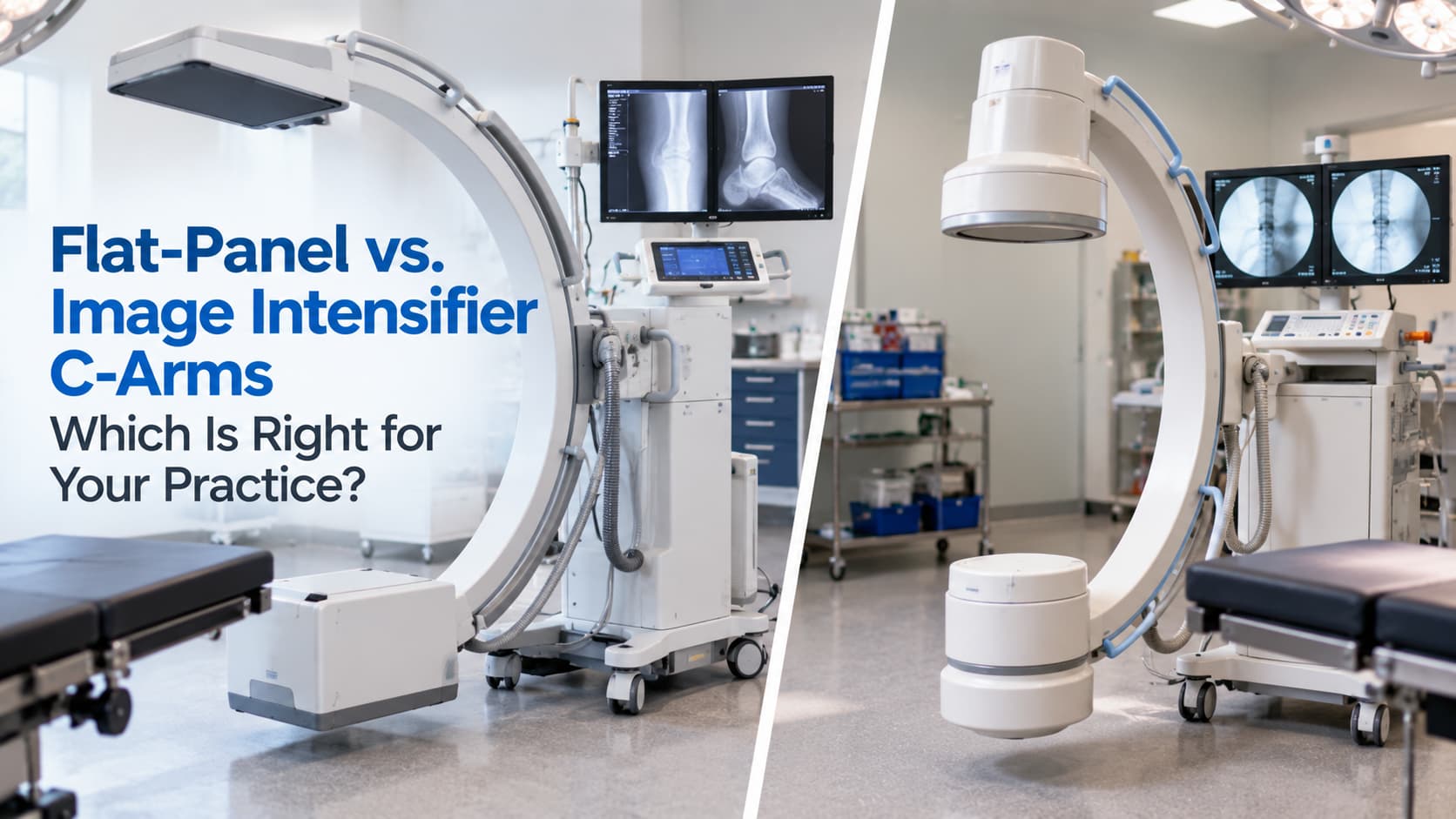
You’re comparing two fundamentally different technologies, and the decision genuinely matters. Whether you run a surgery center in Phoenix, an orthopedic practice in Denver, or a pain management clinic somewhere in the midwest, choosing between a flat panel vs image intensifier C-arm is one of the more consequential equipment decisions you’ll make. The technology affects what you can see, how long the system stays useful, and whether it fits the clinical and financial reality of your operation. There’s no single right answer here, and this article is going to help you figure out which one actually fits your situation.
How These Two Technologies Differ, and Why It Affects Your Daily Work
The core distinction is in how each system captures and displays the X-ray image. An image intensifier uses a vacuum tube to convert X-rays into visible light, which is then processed and displayed on a monitor. A flat panel detector skips the optical conversion step entirely, using a flat, digital sensor that directly converts X-rays into electronic signals. That difference in design has downstream effects on almost every performance category that matters to a buyer.
What You Actually See on the Monitor
Image intensifiers can provide quality images for a few years, but that quality can degrade over time. The technology can also create peripheral field of view distortion. If you’re working on larger patients or need to see fine anatomical detail near the edges of the frame, that distortion can be a real clinical limitation.
Flat panel detectors show minimal image degradation over time and eliminate geometric distortion. The image stays consistent whether you’re in year one or year eight. For orthopedic surgeons doing hardware placement or spine procedures where spatial accuracy matters, that consistency is worth serious consideration.
Radiation Dose Is More Complicated Than Most People Think
Dose efficiency generally favors flat panel systems in standard operating conditions, particularly when magnification is involved. To reach a Zoom 3 setting on an image intensifier, there is a need to increase the dose by 5 times. The same magnification in a flat panel detector involves an increase of about half that.
But research also shows the relationship isn’t absolute. When comparing both machines at 4 pulses per second in low dose mode, one study found no significant difference between systems. Dose outcomes depend heavily on how the equipment is configured and used, not just which type of detector sits in the C-arm. Talk to a qualified medical physicist before drawing firm conclusions for your specific procedures.
Physical Size and Workflow
Flat panel detectors are shorter than image intensifiers, leaving more room to maneuver. In a smaller procedure room or tight surgical suite, that footprint difference affects how easily you position the system and move around the patient. If you’re working in a multi-use room that handles different procedure types throughout the day, the slimmer profile of a flat panel system may simplify your workflow in ways that don’t show up on a spec sheet but matter every single day.
Longevity and Maintenance Over Time
An image intensifier system performing well at year two may look noticeably different at year six. Image gain drops, brightness decreases, and distortion that was tolerable early on becomes more pronounced. That degradation curve is something buyers often underestimate when comparing upfront prices.
The need for parts is greater on an image intensifier because of degradation resulting from heightened radiation dose and other issues. That doesn’t make image intensifier systems unreliable, but it does mean you should factor service costs into your total ownership calculation, not just the purchase price.
Budget and When an Image Intensifier Still Makes Sense
Flat panel C-arms carry a meaningfully higher upfront cost. For a practice doing routine pain management procedures, basic fluoroscopy, or lower-volume work, the performance gap may not justify the price difference. C-arm image intensifiers are widely used for real-time X-ray imaging during orthopedic surgery, cardiac procedures, nerve blocks, pin placement, and pain management. They work, and they continue to be used in high-functioning facilities every day. The question is whether your specific clinical demands have grown beyond what they can comfortably deliver.
If you’re doing high-volume orthopedic or spine work, vascular procedures, or cases where image clarity directly guides instrument placement, a flat panel system’s consistency and field of view advantages become harder to overlook. If your caseload is more routine and budget is a real constraint, a professionally refurbished image intensifier from a reputable source may be the smarter decision right now, with the option to upgrade later. Understanding what to look for when buying a C-arm is the most important step before committing to either technology.
Equipment decisions stall when buyers get stuck comparing specs on paper without connecting those specs to actual clinical use. The best way to move forward is to have a direct conversation with someone who has sold and serviced both types of systems and can ask the right questions about your caseload, budget, room setup, and long-term plans. If you’re ready for that conversation, call (619) 810-0020 or reach out to the team at Pacific Healthcare Imaging for a no-pressure consultation. There’s no obligation, and the right starting point is always understanding your situation before recommending anything.
Frequently Asked Questions
What is the main difference between a flat panel vs image intensifier C-arm in everyday clinical use?
The flat panel uses digital detection to capture images directly, which means less distortion, more consistent image quality over time, and a slimmer physical footprint. The image intensifier uses an older vacuum tube conversion process that works well but can introduce edge distortion and image degradation over years of use. For many routine procedures, both systems get the job done. The difference becomes more significant as procedure complexity increases.
Are image intensifier C-arms still worth buying in 2025?
Yes, in the right context. A properly refurbished image intensifier system from a reputable source can serve pain management clinics, orthopedic offices, and surgery centers well, especially when budget is a primary factor. The key is understanding where the technology’s limitations may affect your specific caseload and planning for service costs over time.
Does a flat panel C-arm always deliver a lower radiation dose than an image intensifier?
Not always. Flat panel systems tend to be more dose-efficient in magnification modes and standard operating conditions, but research shows the dose relationship depends significantly on how each system is configured and used. Some studies have found higher dose output from flat panel systems at their lowest settings. Consult a qualified medical physicist for guidance specific to your procedures and patient population.
Which type of C-arm works better for orthopedic and spine procedures?
Flat panel detectors are generally preferred for orthopedic and spine work because of their higher resolution, larger field of view, and consistent image quality without geometric distortion. When you’re placing hardware or guiding instruments in precise anatomical spaces, image clarity and geometric accuracy matter. That said, the right choice depends on your specific procedure mix and volume.
Can I rent or lease a flat panel C-arm instead of buying one outright?
Yes. Rental and lease options are available for both flat panel and image intensifier systems, which allows facilities to access newer technology without a large upfront capital commitment. This is a common path for practices that are growing their surgical volume or want to evaluate a system before making a long-term decision. Contact (619) 810-0020 or visit Pacific Healthcare Imaging to discuss what rental and lease options are available for your situation.
How do I know when it’s time to upgrade from an image intensifier to a flat panel system?
Common signs include visible image degradation, increasing brightness issues, rising service costs, or a shift in your caseload toward more complex procedures that demand higher image clarity. If your clinical team is compensating for image limitations during procedures, that’s a practical signal worth taking seriously. A review of your current system’s service history and your procedure volume can help clarify whether the upgrade makes financial sense now or in the near future.


